Table Of Content

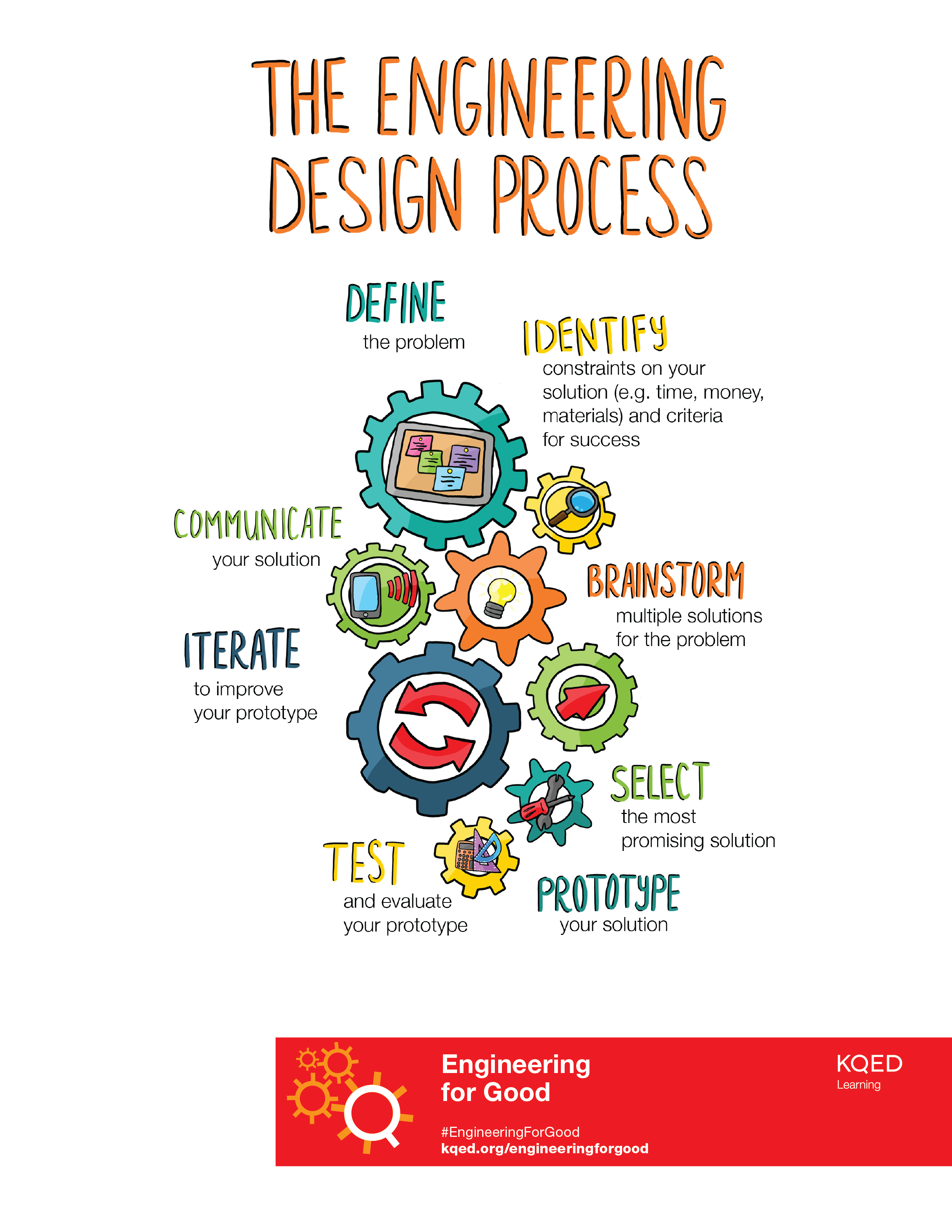
All these types of design have their own peculiarities, but also have common features and follow universal general principles and design approaches. The engineering design process involves various steps from problem definition to prototyping, testing, and evaluation. The product design teams use the engineering design process during the design and development of new products. It is different from the scientific method that involves making observations by doing experiments. Student teams design, build and test small-sized gliders to maximize flight distance and an aerodynamic ratio, applying their knowledge of fluid dynamics to its role in flight.
Best Practices for Designing Products
This collaborative effort ensures that the end product aligns with user needs and operates effectively within its intended environment. Our purpose at Starweaver is to empower individuals and organizations with practical knowledge and skills for a rapidly transforming world. By collaborating with an extensive, global network of proven expert educators, we deliver engaging, information-rich learning experiences that work to revolutionize lives and careers. Committed to our belief that people are the most valuable asset, we focus on building capabilities to navigate ever evolving challenges in technology, business, and design. Students explore energy efficiency, focusing on renewable energy, by designing and building flat-plate solar water heaters. They calculate the efficiency of the solar water heaters during initial and final tests and compare the efficiencies to those of models currently sold on the market (requiring ...
Engineering Design - Example Projects
Working in groups, they follow the engineering design process steps to create model sleds that meet the requirements to transport materials to people in distress that live... Students are given a biomedical engineering challenge, which they solve while following the steps of the engineering design process. In a design lab environment, student groups design, create and test prototype devices that help people using crutches carry things, such as books and school supplies.
Consider Alternative Solutions
Constraints are limitations on the design, such as available funds, resources, or time. Together, the criteria and constraints are referred to as the requirements for a successful solution. While the process follows a defined pattern, it is iterative to yield the best results. Some steps may be completed out of order or repeated to eliminate issues or examine areas of concern. The engineering design process is commonly used on any project that requires designing, building, and testing a product.
Student groups are challenged to program robots with color sensors to follow a black line. Learning both the logic and skills behind programming robots for this challenge helps students improve their understanding of how robots "think" and widens their appreciation for the complexity involved in pro... Whether on Earth or in space, life-threatening illnesses may occur if the water we drink is of poor quality. It’s up to your students to design and build a filtration system for the International Space Station so they can guarantee astronauts get the safe and clean water they need. The TeachEngineering hands-on activities featured here, by grade band, exemplify the engineering design process.
Each iteration should use the data from the previously tried solution to meet all of the initial requirements. In this hands-on activity, student groups design, build, test and improve devices to pump water as if they were engineers helping a rural village meet their drinking water supply. Students keep track of their materials costs, and calculate power and cost efficiencies of the prototype pumps. Students explore how to modify surfaces such as wood or cotton fabric at the nanoscale. They create specialized materials with features such as waterproofing and stain resistance. The challenge starts with student teams identifying an intended user and developing scenarios for using their developed ...
Concept evolution in architectural design: an octonary framework - ScienceDirect.com
Concept evolution in architectural design: an octonary framework.
Posted: Wed, 25 Apr 2018 13:53:26 GMT [source]
Develop a prototype
Students engage in design by choosing from a range of materials to build their prototype. Students' understanding of how robotic ultrasonic sensors work is reinforced in a design challenge involving LEGO® MINDSTORMS® EV3 robots and ultrasonic sensors. Student groups program their robots to move freely without bumping into obstacles (toy LEGO people). The scientific method is reviewed and reinforced with the use of controls and... Students learn how to use wind energy to combat gravity and create lift by creating their own tetrahedral kites capable of flying.
Ignite Innovation With Your IdeaScale Community!

It involves tools and ways of thinking that people can use in almost any situation. Each part of the process reveals information about the problem and possible solutions. TWI can help you with a range of engineering activities, including product and process development, technology acquisition, manufacturing and production, design, prototyping and other technical support. Once testing has been completed, the design can be revised and improved.
This involves creating a detailed design that takes into account all the requirements of the project. The design should be technically sound, economically viable, and meet the needs of the market. While the design process is iterative it follows a predetermined set of steps, some of these may need to be repeated before moving to the next one. This will vary depending on the project itself, but allows lessons to be learnt from failures and improvements to be made.
Dimensions of Design, by Sami Nerenberg - Core77.com
Dimensions of Design, by Sami Nerenberg.
Posted: Thu, 31 Mar 2011 07:00:00 GMT [source]
Student teams create laparoscopic surgical robots designed to reduce the invasiveness of diagnosing endometriosis and investigate how the disease forms and spreads. Using a synthetic abdominal cavity simulator, students test and iterate their remotely controlled, camera-toting prototype devices, whi... With their flotation analyses completed and the stability determined, studen... Design and construct a bridge for a local city that will have a high strength-to-weight ratio and resist collapse. Have students use their understanding of the engineering design process—and a lot of wooden craft sticks—to achieve their goals.
We suggest you also read this article on various types of machining operations. If your prototype didn't meet all your expectations, it can still be called a success. Use your notes to investigate the areas where the prototype under-performed and consider ways to improve these specific issues. Architectural DesignArchitectural design is a concept that focuses on components or elements of a structure translating the non-physical design problem into the physical building product.
Engineers repeatedly evaluate and refine their designs, learning from each test and adjusting their approach accordingly. This approach ensures that the final product not only meets the initial design objectives but also addresses any unforeseen issues or challenges that may have emerged during the development. Students act as engineers to solve a hypothetical problem that has occurred in the Swiss Alps due to a natural seismic disaster.


No comments:
Post a Comment